HVAC Interview Questions and Answers PDF
HVAC Officer Interview Questions and Answers, HVAC Engineer Interview Questions and Answers, HVAC Technician Interview Questions and Answers.
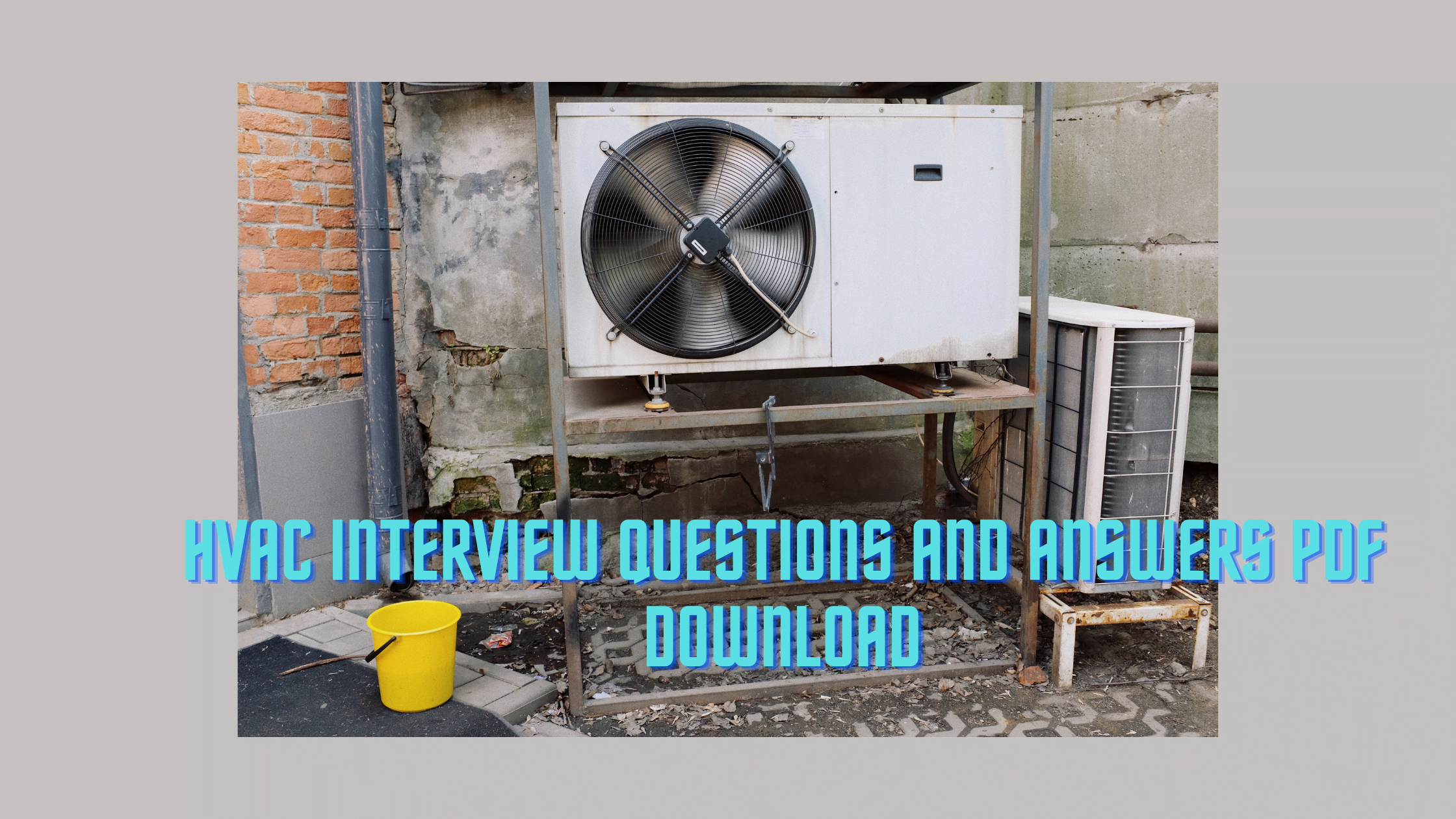
Top HVAC Officer Interview Questions and Answers for Officer, Engineer, Technician
1.What is a Centralised Air System?
Answer:
A split system is a centralised cooling system. An outdoor cabinet, condenser and indoor evaporator coils and a compressor are its components. It is installed in conjunction with the furnace or air handler. The compressor pumps a chemical known as refrigerant through the system.
2.What is meant by a Constant Volume System?
Answer :
Constant Air Volume (CAV) is a category of HVAC ( heating, ventilation and air conditioning) system . Here, the supply airflow rate is constant, but the supply air temperature varies according to the thermal loads of space. These systems are generally small, and they serve a single thermal zone.
3.What Is a Variable Air Volume System?
Answer :
Variable Air Volume (VAV) meets the varying heating and cooling needs of different building zones as they are energy efficient. These systems vary the airflow at a constant temperature, unlike the Constant Air Volume (CAV) system.
4.What Is a Hydronic System?
Answer :
Hydronic systems are used for circulating hot water through the warming baseboards and radiators in floors or ceilings. The advantages of heating your home using a hydronic system are that they are quiet, efficient and durable.
5.What Is a Vapour Compression Cycle?
Answer :
In the Vapour-Compression Refrigeration cycle, the refrigerant undergoes phase changes. The four components of this cycle are compressor, condenser, expansion valve/throttle valve and evaporator. It is extensively used for the air-conditioning of buildings and automobiles.
6.What Is Auto Refrigeration?
Answer :
Auto-refrigeration is a process where an uncontrolled phase change of a hydrocarbon from the liquid state to vapour occurs. This causes rapid chilling of the liquid containing local equipment and/or piping.
7.What does 1 Ton Of Ac denote?
Answer :
A ton describes how much heat the AC unit can remove from a home in one hour. This is measured in the British thermal unit (BTU). One ton of ac removes 12,000 BTUs of air per hour.
8.What Is Btu?
Answer :
The British thermal unit (Btu or BTU) is a unit of measuring heat. The amount of heat that can raise the temperature of one pound of water by one degree Fahrenheit is known as one BTU. It is about 1055 joules.
9.What Is Cfm & Infiltration?
Answer :
The infiltration rate is the measure of the flow rate of outside air into a building. It is denoted as cubic feet per minute (CFM) or litres per second (LPS). The number of interior volume air changes that occur per hour is known as air exchange rate, (I).
10.What Is The HVAC System?
Answer :
HVAC stands for “heating, ventilation and air conditioning,”. These three functions are often combined into one system in today’s homes and buildings.
11.What Does an HVAC Engineer Do?
Answer :
designing the installation, maintenance, and repair of heating, ventilation, air conditioning, cooling, and refrigeration systems are some of the duties of an HVAC engineer.
12.What Are The Types Of Air Conditioning Systems?
Answer :
The types of Air Conditioning Systems are:
- Window Air Conditioner.
- Split Air Conditioner.
- Packaged Air Conditioner.
- Central Air Conditioning System.
13.How is the Lighting Load Calculated?
Answer :
The heat load from lighting in a building is calculated from the number of lights of each type and wattage. These are converted from watts to Btu/hr. Then multiply this number by the usage factor and the special allowance factor.
14.What is the purpose of Air Handling Units?
Answer :
An air handler or an air handling unit is used to condition and circulate air in the HVAC system. Its components include blowers, heating elements, filter racks and sound dampers.
15.Where the Fcu’s Are Used?
Answer :
A fan coil unit is a device that contains a heating or cooling coil and fan. It is part of an HVAC system. They are used in residential, commercial, and buildings. It controls the temperature in the area where it is installed.
16.What is an Air Conditioner Condenser?
Answer :
An air conditioner condenser is a component found in all AC systems. It converts the refrigerant in the compressor from a high temperature, high-pressure vapour by condensation into a high-pressure liquid.
17.What is the use of a Condenser?
Answer :
A condenser condenses a substance from its gaseous to its liquid state. This is done by cooling it. The substance that is transferred to the condenser coolant emits latent heat.
18.What is a Rotary Air Compressor?
Answer :
An example of a gas compressor is a rotary air compressor. It uses a rotary-type positive-displacement mechanism. These compressions are used in the place of piston compressors where high-pressure air is needed. Rotary air compressors are present in large industrial applications and high-power air tools such as jackhammers.
19.What is a gas Compressor used for?
Answer:
A gas compressor is used to increase the pressure of a gas by reducing its volume. An example of a gas compressor is an air compressor.

20.What is a refrigerator?
Answer:-
Refrigerator is the equipment used for maintaining the temperature in a closed space less than the atmospheric temperature.
21.What is refrigerant?
Answer:-
Refrigerant is the fluid used in a refrigerator. Its function is to absorb heat at a lower temperature and emit the heat at a higher temperature in the form of latent heat.

22.What are the Properties of refrigerants?
Answer:-
The properties of refrigerants is that it should have a Low Boiling Point, Low Freezing Point, High Latent heat Evaporation and a High Coefficient of performance. It should be Odourless and colourless, inflammable and non-corrosive.
23.What are the Types of Evaporator?
Answer:-
The types of evaporators are Vertical falling film evaporator, Horizontal film evaporator, Atmospheric forced draft evaporator, Low-temperature vacuum evaporator and Mechanical vapour recompression (MVR) evaporator. Based on the construction, the types of the evaporator are Bare tube evaporator, Plate type of evaporator, Finned evaporator, Shell type evaporator and Tube type evaporator.
24.What are the Types of A/C Filters?
Answer :-
The types of air conditioners filters are Pre Filter, Hepa Filter, Ulpa Filter, Fine Filter, Mini Pleat Filter. Carbon Filter, Bag Filter and Micron Filter.
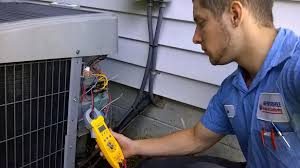
HVAC interview questions and answers PDF download
HVAC interview questions and answers PDF download
Preparing for an HVAC interview requires more than memorizing basic definitions. Employers often ask practical questions about refrigeration systems, air conditioning equipment, preventive maintenance, troubleshooting, HVAC design, site coordination, safety and real-world breakdown situations.
This HVAC Interview Questions and Answers PDF guide is organized by profession and job function so candidates can prepare for the type of interview they are most likely to face.
Whether you are applying for an HVAC technician, HVAC engineer, HVAC supervisor, HVAC maintenance technician, HVAC design engineer, HVAC site engineer, or HVAC job in the Gulf, the questions below focus on practical knowledge and workplace situations.
Instead of using one generic list of interview questions, this guide divides the preparation into eight specialized sections.
HVAC Technician Interview Questions
HVAC technician interviews usually focus on practical equipment knowledge, refrigeration fundamentals, electrical troubleshooting, preventive maintenance and safe working practices.
Technicians may be asked to explain how they diagnose an air-conditioning fault, interpret pressure and temperature readings, inspect components or handle a breakdown under time pressure.
HVAC Technician Interview Questions and Answers
1. A split AC cools well in the morning but loses capacity in the afternoon. What would you check?
Check condenser airflow, outdoor temperature, condenser-coil condition, refrigerant-side readings, compressor current and fan operation. A high ambient condition can expose an underlying condenser or airflow problem.
2. What is the first thing you should do before troubleshooting an electrically powered HVAC unit?
Make the equipment safe and follow the site’s electrical isolation or lockout procedure before opening electrical compartments or touching components.
3. What could cause an evaporator coil to freeze?
Possible causes include low airflow, dirty filters, blocked coils, low refrigerant feed, a restriction or unusually low heat load. The technician should diagnose the cause instead of simply removing the ice.
4. How do you check whether an air filter is restricting airflow?
Inspect the filter and measure pressure drop where instruments and system access permit. Compare the reading with the equipment requirements and check airflow performance.
5. What is the purpose of a compressor?
The compressor moves refrigerant through the refrigeration circuit and raises its pressure and temperature before the refrigerant enters the condenser.
6. What is superheat?
Superheat is the temperature of refrigerant vapor above its saturation temperature at a given pressure. It is useful when evaluating evaporator performance and protecting the compressor from liquid refrigerant.
7. What is subcooling?
Subcooling is the temperature difference between refrigerant saturation temperature and the actual liquid temperature below the condenser outlet saturation condition.
8. Why can an AC have low airflow even when the fan is running?
Possible reasons include a blocked filter, dirty coil, incorrect fan speed, damaged belt, closed damper, duct restriction or excessive system resistance.
9. How would you investigate high condensing pressure?
Check condenser cleanliness, outdoor airflow, fan operation, ambient temperature, refrigerant condition and possible non-condensables.
10. How do you know whether a capacitor may be faulty?
Inspect for damage and verify capacitance with a suitable meter after safely isolating and discharging the component.
11. Why is vacuuming a refrigeration system important?
Proper evacuation removes air and moisture before charging. Moisture and non-condensables can affect performance and reliability.
12. What is preventive maintenance for an FCU?
Typical tasks include filter inspection, coil cleaning, drain inspection, fan and motor checks, electrical inspection, condensate checks and verification of operating temperatures.
13. What can cause an AHU to vibrate excessively?
Possible causes include fan imbalance, belt issues, bearing problems, loose mounting, misalignment or structural vibration.
14. Why should technicians record operating readings after a major repair?
Recorded readings provide evidence that the equipment was tested and create a useful baseline for future troubleshooting.
15. How do you detect a refrigerant leak?
Use an appropriate approved leak-detection method and inspect likely leak points. A refrigerant recharge without addressing the leak is not a permanent solution.
16. What happens if liquid refrigerant enters the compressor?
Liquid can cause severe mechanical and lubrication problems. The technician must investigate the cause of liquid floodback or migration.
17. How do you troubleshoot an AC that has no cooling at all?
Check power, controls, thermostat operation, indoor and outdoor fans, compressor operation, airflow and refrigeration conditions in a logical sequence.
18. Why should condenser coils be cleaned?
Dirty coils reduce heat transfer and can increase condensing temperature, energy consumption and compressor stress.
19. What tools are commonly used by HVAC technicians?
Depending on the equipment, technicians may use pressure instruments, vacuum equipment, multimeters, clamp meters, temperature instruments, leak detectors and airflow measurement tools.
20. What should you do after completing an HVAC repair?
Test the system under normal operating conditions, confirm that the original complaint has been resolved, inspect for secondary issues and document the work completed.
What interviewers look for in an HVAC technician
Interviewers typically look for safe working habits, logical troubleshooting, practical equipment knowledge, measurement skills and the ability to explain what was checked before replacing a component.
A strong technician does not simply say, “The compressor is bad.” A stronger answer explains the electrical, mechanical and refrigeration checks used to reach that conclusion.
HVAC Engineer Interview Questions
HVAC engineer interviews are more focused on system design, cooling-load calculations, equipment selection, hydronic systems, air distribution, controls, commissioning and energy efficiency.
HVAC Engineer Interview Questions and Answers
1. What is a cooling-load calculation?
It is the process of determining how much heat must be removed from a building or zone to maintain the required indoor conditions.
2. What factors affect a building’s cooling load?
Solar gain, building envelope, glazing, occupants, lighting, equipment, ventilation, infiltration, orientation and operating schedules all influence the load.
3. What is TR in HVAC?
TR stands for Ton of Refrigeration and is a unit used to express cooling capacity. One refrigeration ton is approximately 3.517 kW.
4. What is COP?
Coefficient of Performance compares useful heating or cooling output with the corresponding energy input.
5. How do you select an AHU?
Consider airflow, cooling capacity, entering and leaving air conditions, external static pressure, filtration, fan selection, controls, noise and space requirements.
6. How do you size a chilled-water pipe?
Determine required water flow from cooling load and design temperature difference, then select pipe size based on velocity, pressure loss and project requirements.
7. What is chilled-water delta T?
It is the temperature difference between chilled-water supply and return or between entering and leaving water at a specific component.
8. What is air balancing?
Air balancing adjusts and verifies airflow so that branches, terminals and zones receive their required design quantities.
9. What is water balancing?
Water balancing verifies and adjusts hydronic flow through coils and branches to achieve design performance.
10. What is external static pressure?
It represents the pressure resistance the fan must overcome in the connected air-distribution system, according to the defined design basis.
11. Why is ventilation important in HVAC design?
Ventilation supplies required outdoor air and supports indoor air quality, but it also introduces sensible and latent loads that must be considered in system sizing.
12. What is commissioning?
Commissioning is the process of verifying that systems are installed, tested, balanced, controlled and operated according to the intended design requirements.
13. What is a cooling-tower approach?
It is the difference between the cooling-tower leaving-water temperature and the entering outdoor wet-bulb temperature.
14. What causes low chilled-water delta T?
Potential causes include excessive flow, poor control-valve operation, bypassing, oversized coils or zones operating below expected load.
15. How can HVAC energy efficiency be improved?
Improve controls, schedules, airflow and water-flow management, equipment maintenance, part-load operation and system balancing.
16. Why is part-load efficiency important?
Buildings often operate below peak design load, so performance away from full load has a significant effect on energy consumption.
17. How do you compare air-cooled and water-cooled chillers?
Consider efficiency, climate, water availability, maintenance, cooling-tower requirements, plant space, noise and lifecycle cost.
18. What is variable-speed control used for?
It allows fan or pump speed to respond to system demand and can reduce energy use when full capacity is unnecessary.
19. Why is commissioning important for BMS-controlled HVAC systems?
A system can be physically installed correctly but still perform poorly if sensors, sequences, setpoints and control logic are incorrect.
20. What makes an HVAC design maintainable?
Proper access, service clearances, isolation points, drainage, replacement routes, measurement points, labeling and practical component arrangement.
HVAC Supervisor Interview Questions
HVAC supervisor interviews evaluate both technical understanding and leadership ability. Supervisors must manage technicians, work orders, preventive maintenance, breakdowns, contractors, safety and client communication.
HVAC Supervisor Interview Questions and Answers
1. What are the responsibilities of an HVAC supervisor?
Planning work, assigning technicians, monitoring safety and quality, controlling maintenance activities, reviewing equipment conditions and reporting progress.
2. How do you prioritize HVAC breakdowns?
Consider safety, equipment criticality, occupant impact, business impact and whether backup capacity is available.
3. How do you manage a major breakdown?
Make the area safe, assign the right resources, identify the fault, communicate the impact, restore service safely and investigate the underlying cause.
4. How do you manage preventive maintenance?
Use an organized schedule, assign resources, monitor completion and review defects discovered during PPM.
5. How do you handle repeated equipment failures?
Review failure history, identify patterns, perform root-cause analysis and implement a corrective action instead of repeatedly applying temporary repairs.
6. How do you measure technician performance?
Use quality of work, PPM completion, response time, repeat failures, safety performance and work-order documentation.
7. What is root-cause analysis?
It is a structured method of identifying the underlying cause of failure rather than only correcting the immediate symptom.
8. How do you control HVAC spare parts?
Track critical components, consumption, stock levels, lead times and equipment-specific requirements.
9. How do you deal with an unhappy client?
Listen carefully, verify the problem, explain the findings, provide a practical corrective action and communicate progress until closure.
10. How do you supervise contractors?
Check manpower, qualifications, permits, method statements, safety controls, workmanship, testing and documentation.
11. How do you manage an overdue PPM?
Identify why it is overdue, assess equipment criticality, allocate resources and establish a recovery plan.
12. What should be included in an HVAC shift handover?
Critical equipment status, active faults, shutdowns, permits, client complaints, pending work, parts shortages and planned actions.
13. How can you reduce emergency callouts?
Analyze recurring failures, strengthen preventive maintenance, monitor critical assets and ensure essential spares are available.
14. How do you manage technicians with different skill levels?
Assign work according to competency while using coaching and training to develop less-experienced team members.
15. How do you ensure safe HVAC work?
Use risk assessments, PPE, isolation procedures, permits, safe access and site-specific safety requirements.
16. How do you control maintenance documentation?
Review work orders, checklists, readings, defect reports, testing records and closure information.
17. What makes an HVAC supervisor effective?
Technical judgment, clear communication, planning, safety leadership, problem-solving and the ability to manage people and priorities.
18. How do you reduce repeat complaints?
Investigate complaints as trends rather than isolated incidents and verify that corrective action addresses the actual cause.
19. How do you manage HVAC work in occupied buildings?
Coordinate access and shutdowns, minimize disruption, protect occupants and communicate work schedules clearly.
20. What should a supervisor do when a technician recommends a costly replacement?
Ask for supporting measurements, failure evidence and repair history before approving replacement.
HVAC Maintenance Interview Questions
HVAC maintenance interviews focus on preventive maintenance, corrective maintenance, inspection routines, asset reliability and equipment condition.
HVAC Maintenance Interview Questions and Answers
1. What is preventive maintenance?
Planned inspection and servicing intended to reduce the probability of equipment failure.
2. What is corrective maintenance?
Repair performed after a defect or failure has been identified.
3. What is predictive maintenance?
Maintenance based on equipment condition and trends such as vibration, temperature, current or performance.
4. What should be checked during AC preventive maintenance?
Filters, coils, fans, motors, belts, bearings, drains, electrical connections, controls and refrigeration performance.
5. Why should condensate drains be inspected regularly?
Blocked drains can cause water leakage, ceiling damage and indoor-environment problems.
6. Why is belt alignment important?
Poor alignment can increase vibration and wear and shorten belt and bearing life.
7. Why record motor current?
Current readings provide a useful operating baseline and can help identify changing mechanical or electrical conditions.
8. Why is coil cleaning important?
Clean coils support efficient heat transfer and airflow.
9. What should be checked after replacing a motor?
Rotation, current, vibration, airflow, control response and mechanical connections.
10. Why inspect actuator linkages?
A control signal may appear correct while the physical damper or valve fails to move because of a mechanical problem.
11. What is the purpose of a maintenance baseline?
It provides reference operating conditions that can be compared with future readings.
12. Why should chilled-water insulation be inspected?
Damaged insulation can lead to condensation, energy loss and corrosion-related problems.
13. Why inspect vibration on rotating equipment?
Changes in vibration can indicate imbalance, bearing deterioration, looseness or alignment problems.
14. How do maintenance trends help?
They help technicians detect gradual deterioration before it becomes a major breakdown.
15. When should maintenance intervals be reviewed?
When equipment condition, operating severity, failure history or manufacturer recommendations indicate that the current interval is unsuitable.
16. What should an HVAC maintenance report contain?
Equipment identification, task completed, condition found, measurements, defects and recommended corrective action.
17. What is the purpose of a maintenance checklist?
It standardizes inspections so critical tasks are less likely to be missed.
18. How can maintenance reduce energy consumption?
By keeping coils, filters, fans, pumps, controls and heat-transfer surfaces in good operating condition.
19. Why inspect outdoor units more frequently in dusty areas?
Dust can accumulate rapidly on filters and heat-transfer surfaces, reducing airflow and efficiency.
20. What is the difference between maintenance completion and maintenance quality?
Completion means the task was recorded as done; quality means the equipment condition was properly inspected and the required work was actually effective.
HVAC Troubleshooting Questions
Troubleshooting questions are designed to test how a candidate thinks. Interviewers often want to know whether the candidate can diagnose a fault systematically rather than guessing and replacing parts.
HVAC Troubleshooting Questions and Answers
1. The room temperature is high but the cooling valve is fully open. What do you check next?
Check actual chilled-water flow, water temperatures, airflow and coil performance. A fully open valve does not prove that sufficient cooling is reaching the space.
2. A compressor has correct incoming voltage but does not start. What should you check?
Trace the control signal, safety devices, overload, contactor or drive output and compressor circuit.
3. Why might a system have high suction pressure and poor cooling?
Possible causes include high evaporator load, poor compression, control problems or abnormal refrigerant conditions.
4. A condenser fan runs but discharge pressure remains high. Why?
Investigate actual fan airflow, coil condition, ambient temperature, refrigerant condition and possible non-condensables.
5. A VAV zone repeatedly swings between hot and cold. What can cause it?
Sensor problems, control-loop instability, damper hunting, incorrect minimum airflow or reheat-control issues.
6. A pump runs but measured water flow is zero. What do you inspect?
Valve positions, air lock, rotation, suction conditions, strainers, impeller condition and the measurement method.
7. Why should you record readings before changing settings?
Changing the system first can remove valuable evidence about the original fault condition.
8. Why can a split AC cool but still fail to reach room setpoint?
The space may have excessive heat gain, poor air distribution, infiltration or insufficient system capacity.
9. A motor trips after 20 minutes. What should you investigate?
Look at current, temperature, mechanical load, airflow and voltage during the period leading up to the trip.
10. One room has poor cooling while neighboring rooms are normal. What should you compare?
Airflow, diffuser condition, zone controls, heat load, insulation and return-air conditions.
11. Why can a faulty sensor create a mechanical-looking fault?
The control system may respond incorrectly to false temperature or pressure information.
12. What is the value of BMS trend data during troubleshooting?
It can reveal patterns between temperatures, pressures, valve positions, fan speeds and alarms.
13. Why can a bypass valve hide a system fault?
It can temporarily change flow or pressure without correcting the real underlying problem.
14. What should you verify after fixing an HVAC fault?
Run the equipment under an appropriate operating condition and confirm that the original symptom no longer occurs.
15. When should a technician escalate a problem?
When safety, equipment complexity, specialized controls, warranty conditions or technical limitations exceed the technician’s authorized competence.
16. How can poor airflow imitate a refrigerant problem?
Low airflow can cause poor cooling and abnormal coil temperatures that may lead to an incorrect diagnosis of low refrigerant.
17. Why compare current readings with design data?
A reading that appears normal in isolation may be unsuitable for the actual design operating condition.
18. What should you do when an alarm disappears after reset but returns repeatedly?
Investigate the condition that triggers the alarm rather than repeatedly resetting it.
19. How do you troubleshoot intermittent faults?
Use trend data, reproduce the condition when possible and record the system state immediately before failure.
20. What is the most important troubleshooting principle?
Use evidence and a logical sequence of checks instead of replacing components based on assumptions.
HVAC Design Questions
HVAC design interviews test whether candidates can convert building requirements into practical and maintainable systems.
HVAC Design Interview Questions and Answers
1. Why should equipment-room access be considered during design?
Equipment eventually requires servicing or replacement, so access and removal routes must be practical.
2. Why can oversized AC equipment be a problem?
Oversized systems can cycle excessively and may provide poorer humidity control.
3. What is diversity in HVAC load calculations?
It reflects the fact that not all connected loads necessarily operate at their peak simultaneously.
4. Why is duct velocity important?
It affects pressure loss, energy consumption and noise.
5. Why should diffuser selection consider room geometry?
Air throw, pattern and location affect comfort and air distribution.
6. Why should chilled-water pumps be evaluated across their operating range?
The pump must perform efficiently and remain stable under both low and high system demand.
7. Why are isolation valves important?
They allow equipment or sections to be serviced without unnecessarily shutting down the entire system.
8. Why should condensate drainage be designed carefully?
Poor drainage can cause leaks, odors and operational problems.
9. Why is acoustic performance part of HVAC design?
Fans, pumps and air movement can affect occupant comfort and building use.
10. Why must outdoor-unit airflow be considered?
Hot discharge air can recirculate into the condenser and reduce system performance.
11. Why are access doors used in ducts?
They provide practical access for inspection and maintenance where required.
12. Why is insulation continuity important?
Gaps or thermal bridges can cause heat gain or condensation.
13. How can an HVAC designer make balancing easier?
Use practical branch arrangements and provide appropriate balancing devices and measurement points.
14. Why should BMS points be defined during design?
Missing sensors or control points can make a system difficult to operate or troubleshoot after installation.
15. Why evaluate equipment at part load?
Part-load performance often has a major effect on the real annual energy use of a building.
16. What should be checked before selecting a chiller?
Load, design temperatures, efficiency, ambient conditions, maintenance requirements, site constraints and control strategy.
17. Why coordinate HVAC with structural drawings?
Ducts, pipes and equipment require openings, supports and clearances that must fit the structural design.
18. What is a maintainable HVAC layout?
A layout that gives technicians safe access to filters, coils, valves, panels, motors and other serviceable components.
19. Why is future replacement considered during design?
Equipment may need replacement years after installation, and restricted removal routes can create major future costs.
20. What is the objective of HVAC design?
To provide required comfort, indoor-air conditions and system performance while balancing safety, energy, cost, constructability and maintainability.
HVAC Site Engineer Questions
Site-engineer interviews focus on installation, coordination, drawings, inspection, testing, commissioning and construction-site problem solving.
HVAC Site Engineer Interview Questions and Answers
1. What should you do when an HVAC route conflicts with a structural beam?
Review the coordinated drawings and raise the issue through the approved technical coordination process before making a permanent change.
2. How do you verify duct installation?
Check route, dimensions, elevation, supports, access, fittings, connections and approved drawings.
3. What should be checked before pressure testing?
The test section, boundaries, temporary closures, instrument suitability, safety measures and approved testing procedure.
4. Why should HVAC and electrical services be coordinated?
To avoid clashes and reduce the risk of water leakage or access problems near electrical equipment.
5. Why inspect pipe supports before insulation?
Incorrect supports can become difficult to correct after the pipe is concealed.
6. What do you check when receiving HVAC equipment on site?
Model, size, accessories, visible damage, documentation, lifting requirements and storage conditions.
7. What should an HVAC site engineer record?
Installation status, inspections, tests, discrepancies, changes and outstanding work.
8. Why should balancing not be left until everything is concealed?
Access and measurement points may become difficult to reach after ceilings or finishes are closed.
9. How do you verify valve installation direction?
Check the valve body arrow and the approved drawings or manufacturer’s instructions.
10. Why inspect sleeves and penetrations?
Incorrect penetrations can create coordination, waterproofing, fire-stopping or insulation problems.
11. What is checked before commissioning a pump?
Alignment, rotation, lubrication, valves, strainers, electrical protection, controls and system condition.
12. How should approved site changes be recorded?
Update the relevant drawings or digital records and ensure the final as-built documents match the actual installation.
13. What can happen if diffuser locations are moved without coordination?
Air distribution, ceiling coordination, lighting, sprinklers and aesthetics may be affected.
14. Why is fire stopping important around HVAC penetrations?
Unapproved penetrations can compromise the building’s fire-resistance strategy.
15. What is TAB?
Testing, Adjusting and Balancing is the process of verifying and adjusting system airflow and water flow to achieve required performance.
16. How do you prepare for HVAC commissioning?
Ensure equipment is complete, filters and coils are clean, controls are operational, balancing is possible and required documentation is available.
17. What should you do when a drawing detail is unclear?
Clarify through the project’s approved technical process rather than improvising a permanent solution.
18. Why is site housekeeping important for HVAC work?
Debris can enter equipment and ductwork and create safety and quality problems.
19. What should be checked after insulation installation?
Continuity, thickness, joints, vapor sealing where required, support details and visible damage.
20. When should a snag item be closed?
After the responsible party completes the correction and the site engineer verifies the result.
HVAC Questions for Gulf Jobs
HVAC interviews in the Gulf can focus strongly on high ambient temperatures, dust, humidity, critical cooling, preventive maintenance and work-site safety.
This section is especially useful for candidates applying for HVAC jobs in Dubai, Abu Dhabi, Qatar, Saudi Arabia, Oman, Bahrain and Kuwait.
HVAC Gulf Job Interview Questions and Answers
1. What HVAC challenge is common in Gulf summer conditions?
High outdoor temperatures place heavy demand on cooling and heat-rejection equipment, so condenser performance and system capacity become particularly important.
2. Why is dust a major HVAC maintenance concern in Gulf locations?
Dust can quickly load filters, coils and outdoor equipment, reducing airflow and heat transfer.
3. How would you inspect an HVAC system during extreme summer operation?
Review operating temperatures, pressures where applicable, airflow, fan condition, condenser cleanliness, chilled-water performance and equipment alarms.
4. Why can condenser maintenance be especially important in Gulf climates?
High ambient temperatures combined with dust can make heat rejection more difficult and increase system stress.
5. What should technicians consider when working outdoors in Gulf summer conditions?
Follow the employer’s heat-stress controls, hydration requirements, work-rest practices, PPE and site safety procedures.
6. Why should outdoor HVAC equipment selection consider high ambient conditions?
Equipment must be capable of operating within its rated environmental range without unacceptable capacity or reliability problems.
7. Why is corrosion important in coastal Gulf cities?
Salt-laden air can accelerate corrosion of outdoor equipment and components.
8. What should be monitored on a chilled-water system during peak summer?
Supply and return temperatures, flow, equipment loading, condenser conditions and alarms.
9. How do you manage an HVAC shutdown in a hotel or mall?
Plan the shutdown carefully, identify affected zones, coordinate with operations and ensure manpower, tools and spare parts are ready.
10. Why is spare-parts planning important for critical Gulf facilities?
Cooling systems can be operationally critical, and delays in obtaining specialized parts can extend downtime.
11. What should you do if a client requests refrigerant charging without leak investigation?
Explain that charging alone may provide only temporary improvement and that the underlying cause should be identified safely.
12. Why can humidity remain a problem even when cooling demand is high?
Improper ventilation, infiltration, coil conditions and controls can affect moisture removal and indoor humidity.
13. Why should fresh-air systems be inspected regularly?
Dust accumulation can restrict airflow and reduce ventilation performance.
14. What is important when working on rooftop HVAC equipment?
Follow approved access, fall-protection, permit and electrical-isolation requirements.
15. How should a candidate explain a lack of Gulf experience in an interview?
Emphasize transferable HVAC skills while demonstrating awareness of high ambient temperature, dust, corrosion, critical cooling and safety requirements.
16. What documentation is important on Gulf facility-management projects?
Work orders, PPM records, breakdown reports, readings, permits, inspection records and handover documentation.
17. Why is communication important on multinational Gulf work sites?
Teams may have different technical backgrounds and languages, so clear instructions, confirmation and documentation reduce mistakes.
18. What should you check before a major shutdown?
Affected systems, backup cooling, isolation points, manpower, tools, parts, permits and restart procedures.
19. Why may condenser-coil cleaning be required frequently in Gulf conditions?
Dust and airborne particles can accumulate quickly and reduce heat rejection.
20. How should you answer, “Can you work under pressure?” in an HVAC interview?
Explain that you stay calm, protect safety first, use measurements to identify the fault, prioritize critical equipment and communicate clearly while restoring service.
Download HVAC Interview Questions & Answers PDF
Preparing from a structured PDF can make interview revision easier because you can save the questions, review them offline and practice answers before attending an interview.
Our HVAC Interview Questions & Answers PDF brings together profession-specific questions for:
- HVAC Technician
- HVAC Engineer
- HVAC Supervisor
- HVAC Maintenance
- HVAC Troubleshooting
- HVAC Design
- HVAC Site Engineer
- HVAC Gulf Jobs
The questions are written around practical situations rather than relying only on basic definitions. This makes the PDF useful for candidates preparing for technician interviews, engineering interviews, maintenance roles and Gulf HVAC recruitment.
Download HVAC Interview Questions & Answers PDF
Download HVAC Interview Questions & Answers PDF
The PDF contains 160 profession-specific interview questions and answers covering the eight HVAC career areas.
How to Use the HVAC Interview Questions PDF
Start with the section that matches the position you are applying for.
For an HVAC technician interview, focus on refrigeration, electrical checks, airflow, pressure and temperature diagnosis, preventive maintenance and safe repair practices.
For an HVAC engineer interview, focus on cooling loads, equipment selection, chilled-water systems, air distribution, controls, commissioning and energy efficiency.
For an HVAC supervisor interview, concentrate on manpower planning, breakdown management, PPM, contractor control, safety, client communication and team leadership.
For HVAC Gulf jobs, pay particular attention to high-ambient operation, dust, corrosion, critical cooling, preventive maintenance and site safety.
Do not memorize the answers word-for-word. Use the answers as a framework and add examples from your own projects, equipment experience and responsibilities.
Final Thoughts
The best HVAC interview answers demonstrate both technical knowledge and practical judgment.
A strong candidate should be able to explain not only what an HVAC component does, but also how they would identify a failure, which measurements they would take, how they would work safely and how they would prevent the same problem from happening again.
This profession-specific approach is useful for candidates searching for HVAC interview questions and answers PDF, HVAC technician interview questions and answers PDF, HVAC engineer interview questions and answers, HVAC supervisor interview questions and answers PDF, and HVAC interview questions for Gulf jobs.
Use the downloadable PDF for repeated practice and prepare examples from your own work experience so that your interview answers sound practical, confident and relevant to the position.
TAGS-
hvac technical interview questions and answers pdf
hvac interview questions pdf
hvac questions and answers pdf in hindi
hvac interview questions and answers pdf download
hvac interview questions and answers pdf
ac technician interview questions and answers pdf
hvac technician questions and answers pdf
hvac technician interview questions and answers pdf
hvac supervisor interview questions and answers pdf
air conditioner interview questions and answers in hindi
“refrigeration and air conditioning interview questions and answers pdf
download”
ac technician interview questions and answers in hindi pdf
114 hvac interview questions
hvac questions and answers pdf
hvac engineer interview questions and answers pdf
hvac interview questions in hindi pdf
chiller technician interview questions and answers
hvac questions and answers pdf download
refrigeration and air conditioning interview questions and answers pdf
hvac interview questions
hvac technician interview questions
ac technician interview questions and answers
hvac engineer interview questions
hvac foreman interview questions
hvac supervisor interview questions
interview questions for hvac foreman
hvac basic interview questions
chiller interview questions and answers pdf
hvac interview questions in hindi
chiller plant interview questions pdf
hvac questions and answers
bms operator interview questions answers pdf
hvac supervisor interview questions and answers
hvac maintenance interview questions
hvac interview questions for experienced
ac technician question and answer
ac technician interview questions and answers hindi
hvac interview questions and answers
hvac technician interview questions and answers
hvac technical questions and answers pdf
hvac interview questions to ask
hvac design engineer interview questions and answers pdf
hvac technician interview questions and answers in hindi
hvac maintenance supervisor interview questions and answers
hvac question and answer
questions for hvac interview
hvac interview technical questions
interview questions for hvac technician
hvac interview questions pdf download
pdf
air conditioning questions and answers pdf
hvac design engineer interview questions
hvac technical interview questions
bms interview questions
hvac questions for interview
sales engineer interview questions and answers pdf
refrigeration and air conditioning questions and answers pdf in hindi
hvac pdf
hvac tech interview questions
hvac test questions and answers pdf
interview questions and answers pdf
hvac technical questions






Leave a Reply